We are often asked how Critical Chain Project Management (CCPM) differs from Microsoft Project and other traditional project-management applications.
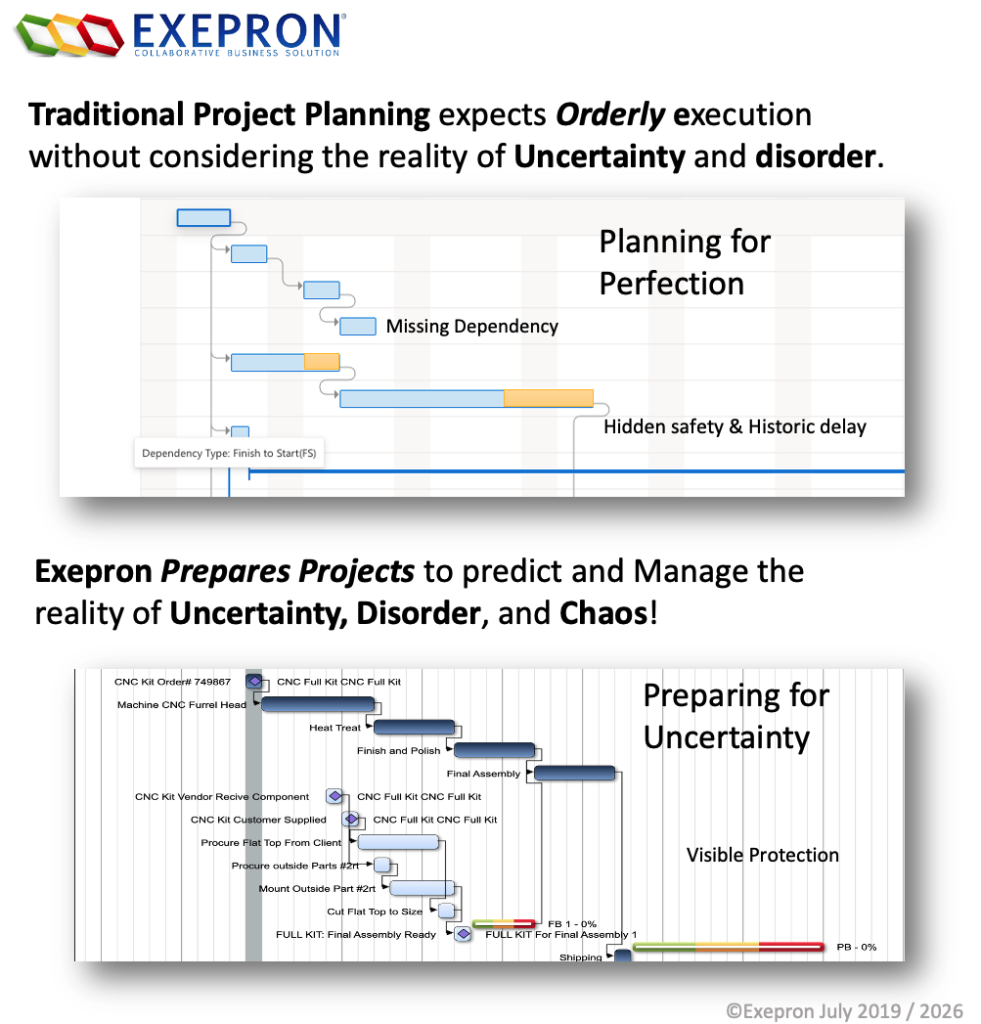 There are at least 14 fundamental fault lines that CCPM addresses in practical application. These include unrealistic assumptions about task-duration estimates and their probability distributions; failure to account adequately for resource contention during planning; missing or incomplete dependencies; subjectively assigned milestones; and the treatment of task start and finish dates as fixed calendar commitments.
Taken together, these limitations make it virtually impossible for a traditional scheduling system to provide reliable project control in an environment characterized by uncertainty, variability, and shared resources.
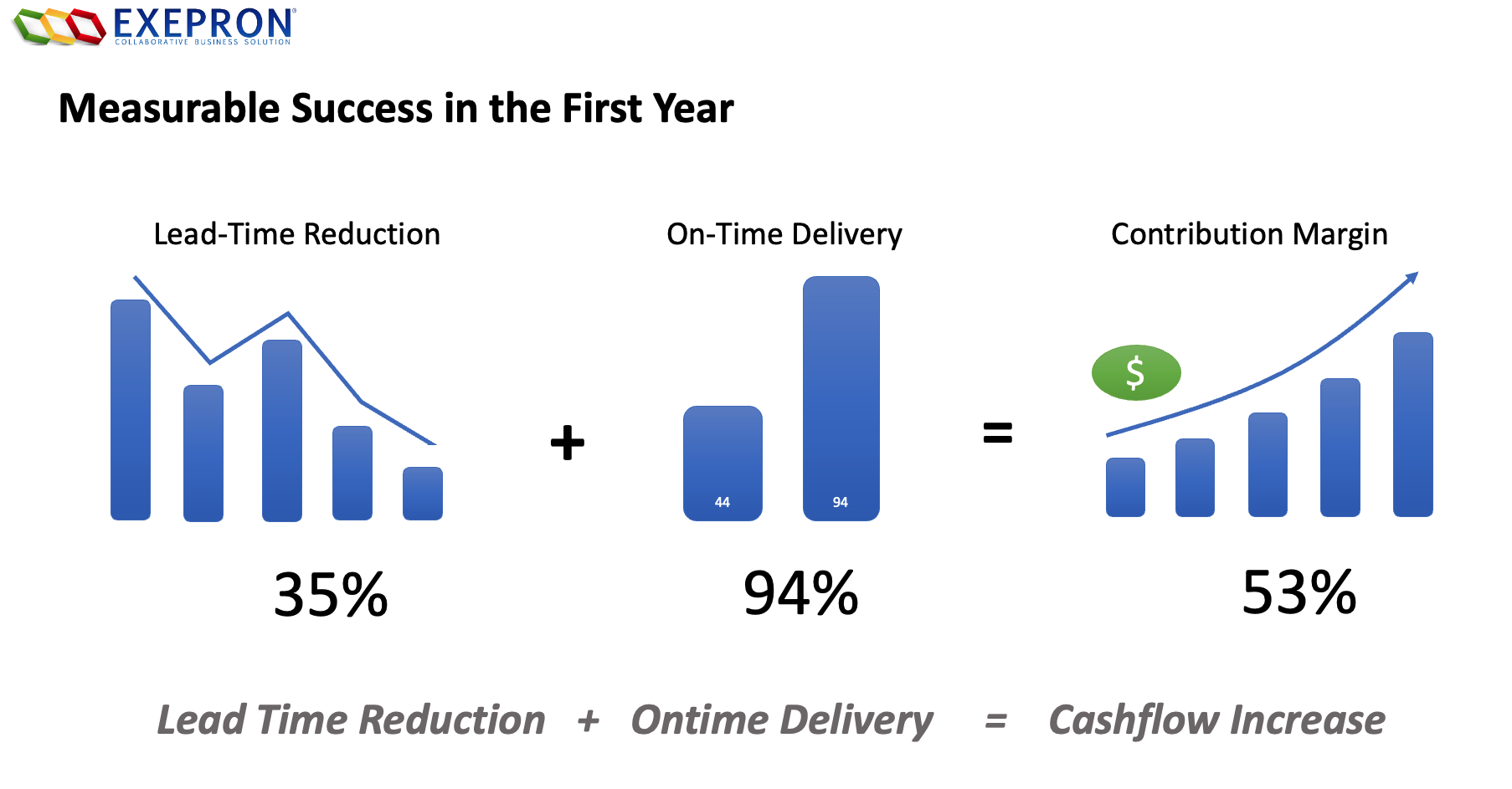
The performance gap is significant: traditional project-management approaches commonly achieve on-time completion rates of approximately 50% to 60%, while organizations that implement CCPM effectively frequently report on-time and on-budget performance exceeding 90%.
We will focus here on two additional fault lines that help explain this difference in performance.
Regarding Microsoft Project and other traditional MP Applications, we can position the conversation around the fundamental difference between traditional project tracking and Critical Chain execution.
Microsoft Project is a familiar tool for building Gantt charts, establishing task durations, and reporting progress. Besides the obvious weakness on predictive resourcing and resource management, another of the major weaknesses of the traditional approach is its reliance on percentage-complete reporting.
Reporting Percentage Complete:
Reporting that a task is, for example, 50% or 90% complete assumes that its original duration and finish date can be estimated accurately. In real projects—particularly complex engineering and custom-machine projects—task durations contain significant uncertainty and cannot be predicted with that degree of precision. Leaving this traditional method without predictive capability. This produces the familiar project-management problem: “We are 90% finished, but we still have 50% of the work left to do.”
The illusion of Progress:
Percentage complete can therefore create an illusion of progress without precision to provide a dependable indication of when the project will actually finish. It also encourages attention to how much work has been performed rather than predicting how much risk, and uncertainty remains and whether the delivery commitment is at risk.
Critical Chain Method:
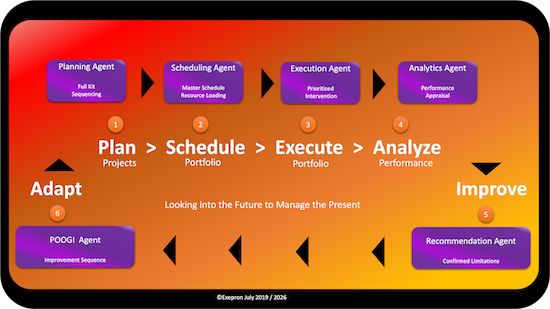
Exepron takes a fundamentally different approach. It is purpose-built around Critical Chain Project Management and Theory of Constraints. Instead of relying primarily on subjective percentage-complete estimates, it uses remaining-duration estimates and buffer consumption to show the health and progress of the project and the level of risk to meet the completion date.
The key distinctions to emphasize are:
- Exepron is designed around Critical Chain scheduling and execution rather than requiring the company to adapt a traditional critical-path tool to a CCPM operating model.
- Progress is evaluated using remaining duration, buffer status, resource risk quotiens providing a more realistic view of completion risk than percentage-complete reporting.
- Buffer management gives managers early warning when delivery commitments are threatened and helps them focus attention where intervention is genuinely needed.
- Resource-focused planning helps leadership identify shared-resource constraints across multiple projects.
- Dynamic Master Schedule Drum supports TOC-based portfolio management by controlling the release and flow of work according to the organization’s capacity.
- Execution priorities are based on protecting project flow and delivery commitments—not merely maintaining task dates to maintain a record of delays.
If you business relies on scheduling to achieve success, like the majority of businesses, then the practical question is not whether Microsoft Project can produce a schedule. It is whether the project-management system can account for uncertainty, manage scarce resources, synchronize multiple long-duration projects, establish clear daily priorities, and protect customer commitments while assisting business grwoth.
That is where Exepron’s Critical Chain, buffer-management, resource and risk-management, and portfolio-management capabilities provide a compelling advantage.
To find out more contact CustomerSupport@Exepron.com