The $18K number your P&L can’t see and the Balance Sheet Disguises
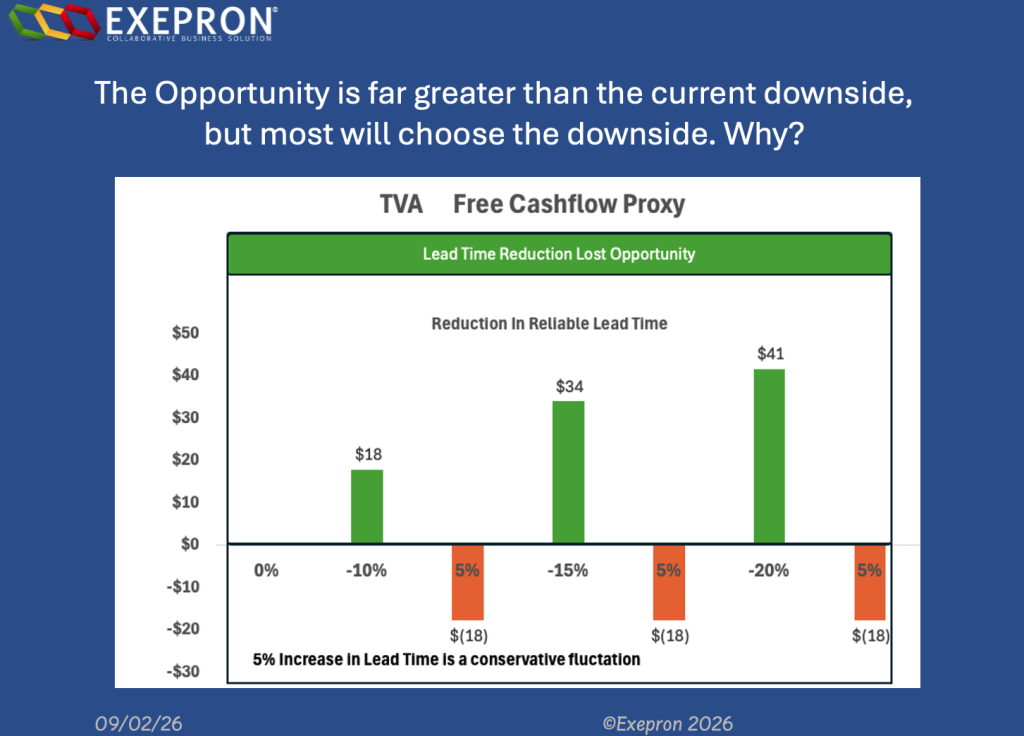
A five percent drift in delivery lead time costs the average manufacturer the same dollar amount as a ten percent compression earns them.
Same swing. Wildly different amounts of effort. One direction happens by accident. The other requires someone to challenge a process everyone agreed was working.
Most finance and ops teams never see this trade off because their accounting system was never built to show it. It measures direct cost. It doesn’t measure the delay sitting quietly in your work-in-process, your credit approval queue, or the order that took ten extra days to leave the floor.
Is Inventory an Asset or a Liability?
Well, it depends who you ask.
For the operations manager, it can either block production or promote flow.
For the financial manager, it can mean collateral against which to borrow a working capital.
For the sales manager, it could mean finish goods to support sales. The only purpose of inventory is to support Thru-Put.
The Inventory Delay disguise:
On a traditional balance sheet, Work-in-Progress (WIP) sit on the asset side. Inventory, partially completed projects, tasks “in progress” — all booked as owned value. More WIP often looks like more Asset Value.
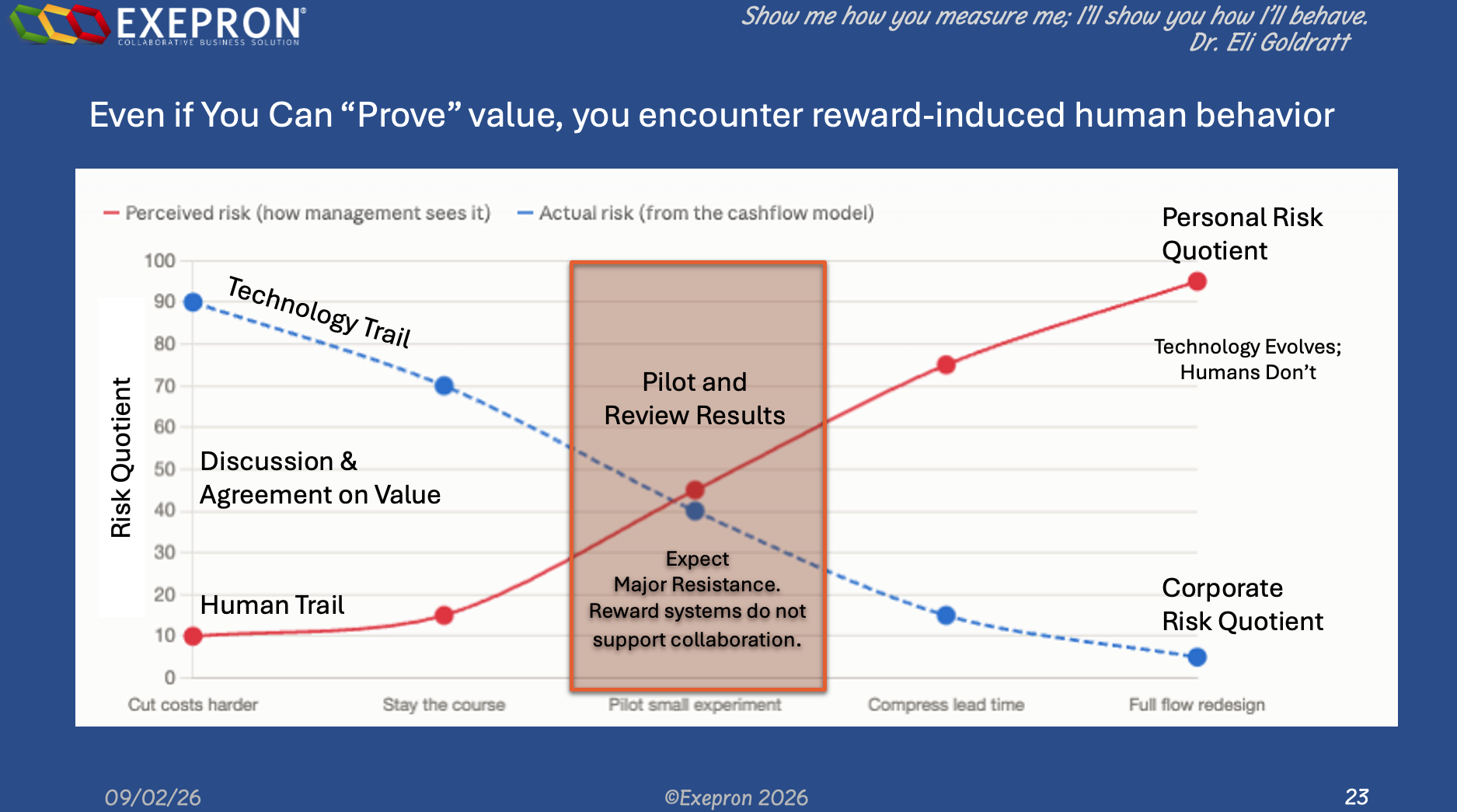
Even if you can prove significant value, you will run into human behavior and the corporate reward system. Show me how you measure me and I’ll show you how I behave Dr Eli Goldratt.
Reframing the debate: Delays, once eliminated, convert into a Real Cash Asset
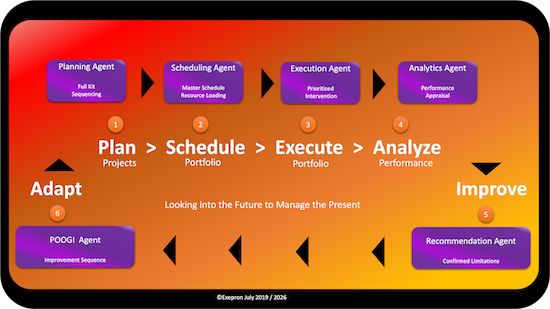
That is where Exepron’s Critical Chain, buffer-management, resource and risk-management, and portfolio-management capabilities provide a compelling advantage. Reduce lead-time convert to tangable Cash Assets on the balance sheet, not phantom value.
To find out more contact CustomerSupport@Exepron.com